
Virtual Tour
General Information
Transport
Landscape
Culture
estlatlit
Events Calendar
Interactive Map of VHB
FAQ
Guestbook
VHB Zone
Publications
Links
VH in Baltic States
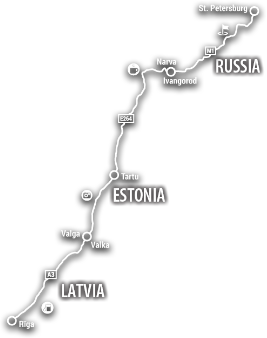
map_image
 

CULTURAL LIFE IN TAURAGE AND ŠIAULIAI

Cultural life in Taurage and Šiauliai

Siauliai In Šiauliai County Via Hanseatica separates two ethnographic regions, Samogitia (Lowlands) and Aukštaitija (Highlands). Samogitia is a quiet and peaceful region: it provided spiritual support to medieval Lithuania and served as a source of its strength. Today you will find there the intertwining patterns of different traditions, ways of life, and dialects.

Guests of Šiauliai County have a great chance to get acquainted with significant cultural monuments and famous tourist attractions. There are 73 museums, 28 estates, 47 mounds, and more than 20 homesteads to be visited. Cultural traditions and customs are enshrined, enriched and promoted here; the continuity of different ethnical traditions is ensured. More than 400 events promoting these traditions are organized annually.

Tauragė County is the land of industry, forestry, agriculture and tourism. It is a significant industry (wood processing, building materials, and food) and culture region of the southern Žemaitija.

In Pagėgiai in Taurage County you will find many valuable natural and cultural monuments that are unique places of interest. This region is also famous for its history. The most often visited objects by tourists from Lithuania as well as from abroad are for example the Vilkyškiai settlement, the mounds of Šereitlaukis, Vilkyškiai, and Raudondvaris, Bubliškė park, Šilgaliai manor, and unique natural monuments. Active tourists, fishermen and huntsmen are welcome to choose a desirable activity as well.

There are many national and international events held in Taurage that are famous in Lithuania as well as abroad, for example cultural tourism holiday “Panemunių žiedai”, festival of choirs “Kur bakūžė samanota”, international amateur theatre festival “Senjorai ir jaunystė”, and a folk-dance festival “Mituvos sūkuriai” held in Jurbarkas municipality.

General information on cultural events in Lithuania:
http://www.travel.lt/turizmas/index.jsp
http://www.visitlithuania.net/travelportal/cgi/dir.cgi?dir=113
http://en.lt.leisureguide.info/portal/categories/7

Find more information on cultural events in Šiauliai:
http://tic.siauliai.lt/

RELIGION

Taurage The historically predominant religion is Roman Catholicism. The Roman Catholic Church has been the majority confession since the Christianization of Lithuania in the end of fourteenth century and in the beginning of fifteenth century (in 1387 Lithuania, the Highland and in 1413 Samogitia, the Lowland). Today, 79% of Lithuanians are Roman Catholic. The Roman Catholic Church used to be an influential factor in the country, and some priests actively led the resistance against the Communist regime and, after independence was regained, against socialism and liberalism, especially in ethical questions.

The nationally renowned anti-communist resistance shrine, the Hill of Crosses, upon which thousands of Latin rite crosses of all sizes have been placed, is located near the city of Šiauliai. Erecting Latin crosses on the hill was forbidden by the Czarist Russian Orthodox authorities in 1880s. In the twentieth century, the Soviet authorities also forbade such explicit religious symbols. Despite Soviet prohibitions, Lithuanian Roman Catholics continued to put small crucifixes and larger crosses on the Hill of Crosses. Pope John Paul II visited the hill during his visit to Lithuania.

The diverse Protestant community (1.9% of the total population) is much smaller than the Roman Catholic Church. Small Protestant communities are dispersed throughout the northern and western parts of the country. Lithuania was historically positioned between the two German-controlled states of Livonia to the north and the Protestant formerly monastic, Teutonic State of Prussia to its south. In the 16th century, from those two regions Lutheran Protestantism started to spread into the country. Since1945 Lutheranism in the country has declined.

Various Protestant churches have established missions in Lithuania since 1990, including the United Methodists, the Baptist Union, the Mennonites, and World Venture.

The country also has minority communities of Eastern Orthodoxy (mainly among the Russian minority), to which about 4.9% of the total population belongs, as well as of Judaism, Islam and Karaism, which together make up another 1.6% of the population.


FOOD

Lithuanian traditional cuisine took shape over many centuries and was much influenced by cultural contacts with neighboring nations. A good example is potato cake – kugelis, which Lithuanians adapted from the German kitchen. This has now become a favorite dish throughout Lithuania.

Lithuania is divided into five ethnic regions. This regional division is evident in foods that are particular to each region. The Highlanders live in the rich loam, northeast region, and are known for their various pancakes and cottage cheese dishes. The Samogitians inhabit the northwest region and have their special sour butter, porridges and much gruel. Dzukai are the people of the southeast region, where the soil is sandy and forested. They are main growers and users of buckwheat in all its forms, as well as mushrooms and potatoes. People of the southwestern region favor smoked meats, sausages and zeppelins. Fish plays an important role in the menu of the seacoast Lithuanians and also of those living near lakes and rivers.

Burbiskis Manor One of the oldest and most fundamental Lithuanian food products was and is rye bread. Soups have also a significant place in Lithuanian's traditional menu. Most popular are sour soups, sauerkraut, beet and sorrel, cooked with smoked meat. Sauerkraut soup is also cooked using goose meat. Most soups are served with bread or potatoes. Sauerkraut and beet soups are eaten in winter, while sorrel, beet greens and milk soups are eaten in spring and summer. Cold beet soup with hot potatoes is a very popular summer fare. Cold sweet soups are also popular, especially in summer.

Lithuanians consume a lot of meat and meat by-products. Pork has always been the most widely used meat – fresh, brined or smoked, and continues to be so to this day. The most popular potato dishes are "zeppelins", potato sausages, potato casserole and pancakes. Ceremonial and traditional drinks are mead and beer. True mead is made of natural, light honey. Another ancient drink is made from birch and maple sap, collected in early spring.


WEATHER
w_estonia.jpg
Tartu
image 12o C / 54 F

Wind: 5.7 mps

Air pressure:
753.1 mm/hg

Visibility:
10.00 km

w_latvia.jpg
Riga
image 14o C / 57 F

Wind: 6.2 mps

Air pressure:
750.8 mm/hg

Visibility:
10.00 km

w_lithuania.jpg
Šiauliai
image 14o C / 57 F

Wind: 6.2 mps

Air pressure:
750.1 mm/hg

Visibility:
10.00 km

 
Via Hanseatica © 2007